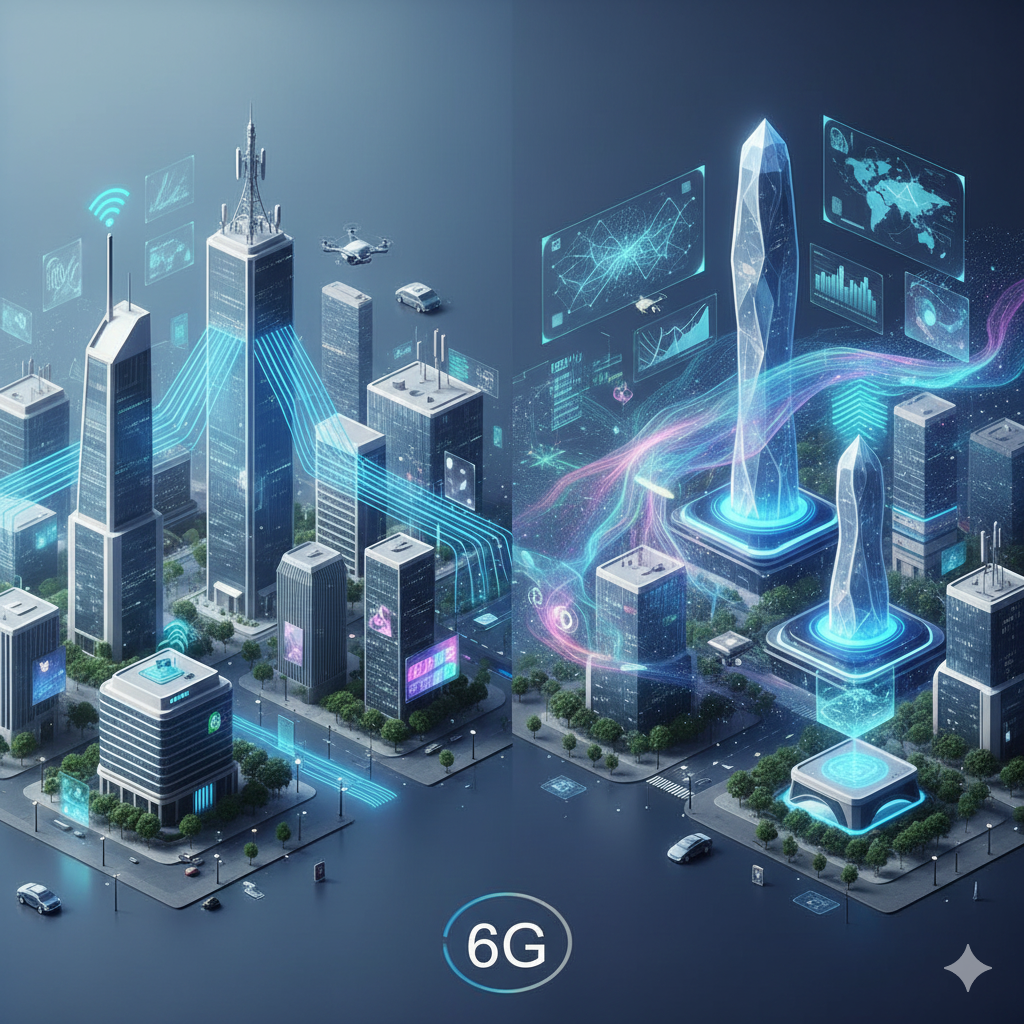
5G vs 6G technology is becoming one of the most discussed topics in the tech world. While 5G is still expanding globally, researchers are already shaping the next generation—6G.
In this blog, you will clearly understand how 5G and 6G differ, what benefits they offer, and how they will impact daily life and industries.
Table of Contents
Introduction to 5G and 6G Technology
Speed and Data Transfer Capabilities
Latency and Network Responsiveness
Network Architecture and Intelligence
Use Cases and Real-World Applications
Energy Efficiency and Sustainability
Security and Privacy Enhancements
Future Scope of Wireless Technology
Introduction to 5G and 6G Technology
5G technology focuses on faster mobile internet, low latency, and support for IoT devices. It enables smart cities, autonomous vehicles, and advanced mobile experiences.
6G technology goes a step further. It aims to connect humans, machines, and digital worlds seamlessly using AI-driven networks and ultra-high-speed communication.
Speed and Data Transfer Capabilities
Speed is one of the biggest differences in the 5G vs 6G technology comparison.
5G offers speeds up to 10 Gbps, which is already a major upgrade from 4G. However, 6G is expected to deliver speeds up to 1 Tbps, making data transfer almost instant.
This massive jump will support holographic communication and real-time digital twins.
Latency and Network Responsiveness
Latency defines how fast data travels from source to destination.
5G reduces latency to around 1 millisecond. This is perfect for gaming, video calls, and automation.
6G aims for near-zero latency (microseconds). This improvement will be crucial for remote surgeries, space communication, and immersive AR/VR experiences.
Network Architecture and Intelligence
5G networks are software-driven and use cloud-based infrastructure.
6G networks will be AI-native. Artificial intelligence will manage traffic, predict failures, and optimize performance automatically.
Key Technical Differences
| Feature | 5G Technology | 6G Technology |
|---|---|---|
| Maximum Speed | Up to 10 Gbps | Up to 1 Tbps |
| Latency | ~1 ms | < 0.1 ms |
| Core Tech | Software-defined networks | AI-powered intelligent networks |
| Spectrum | Sub-6 GHz & mmWave | Terahertz (THz) bands |
Use Cases and Real-World Applications
5G is already powering smart homes, video streaming, and connected vehicles.
6G will unlock advanced use cases like brain-computer interfaces, holographic meetings, and fully automated industries.
Healthcare, education, and manufacturing will benefit the most from these innovations.
Energy Efficiency and Sustainability
Energy consumption is a growing concern in telecom networks.
5G is more efficient than previous generations but still requires high infrastructure power.
6G is being designed with green technology principles. It will use energy-harvesting devices and intelligent power management to reduce carbon impact.
Security and Privacy Enhancements
5G improves security with better encryption and network slicing.
6G will integrate quantum encryption and AI-based threat detection. This will provide stronger protection against cyberattacks and data breaches.
As connectivity grows, security will become more critical than ever.
Future Scope of Wireless Technology
The future of wireless communication goes beyond smartphones.
6G is expected to support smart planets, space communication, and fully immersive digital experiences. While commercial rollout may take a decade, research is progressing rapidly.
The 5G vs 6G technology discussion shows how innovation never stops in the digital world.