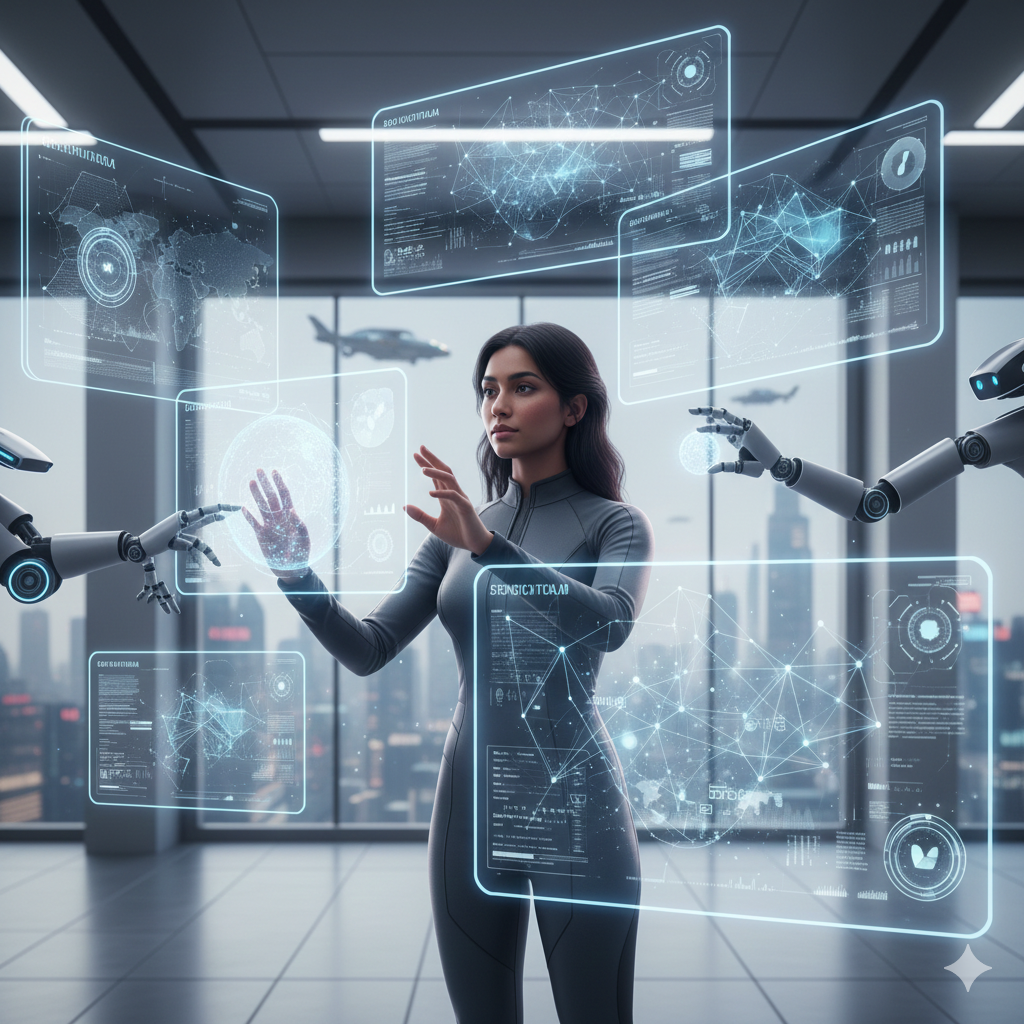
Artificial intelligence is no longer a future concept. It is already shaping how we live, work, and think. The impact of artificial intelligence on humans can be seen in daily life, from smartphones to healthcare systems. As AI continues to grow, its influence on human behavior and society is becoming deeper and more complex.
In this blog, we will explore how artificial intelligence affects humans in positive and challenging ways, and what it means for our future.
Table of Contents
Introduction to Artificial Intelligence and Humans
How AI Is Changing Daily Human Life
Impact of AI on Jobs and Careers
Role of AI in Healthcare and Wellbeing
Social and Psychological Effects of AI
Benefits and Risks of Artificial Intelligence
Future Relationship Between Humans and AI
Introduction to Artificial Intelligence and Humans
Artificial intelligence refers to machines that can think, learn, and make decisions like humans. Today, AI is used in search engines, virtual assistants, recommendation systems, and even cars.
The impact of artificial intelligence on humans is not limited to technology users. It affects emotions, productivity, decision-making, and social connections. Therefore, understanding this relationship is essential in the modern digital age.
How AI Is Changing Daily Human Life
AI has become part of everyday routines. Smartphones use AI to improve camera quality and battery life. Navigation apps use AI to predict traffic and save time.
Moreover, AI-powered tools help people manage tasks faster. As a result, daily life is becoming more efficient and convenient. However, over-dependence on AI may reduce critical thinking skills over time.
Impact of AI on Jobs and Careers
One major concern about artificial intelligence is employment. AI is automating repetitive and manual tasks across industries. This change affects traditional job roles.
Job Creation vs Job Replacement
While AI replaces some jobs, it also creates new opportunities. Careers in data science, AI development, and cybersecurity are growing rapidly. Humans now need to upgrade skills to work alongside intelligent machines.
Below is a simple comparison table:
| Area | Human Role | AI Role |
|---|---|---|
| Manufacturing | Supervision | Automation |
| Healthcare | Diagnosis support | Data analysis |
| Marketing | Strategy | Personalization |
| Education | Teaching | Smart assistance |
Role of AI in Healthcare and Wellbeing
AI is transforming healthcare by improving accuracy and speed. Doctors use AI tools to detect diseases early and recommend treatments.
Additionally, AI-powered fitness apps help people track health goals. Mental health chatbots also provide basic emotional support. Hence, the impact of artificial intelligence on humans in healthcare is mostly positive when used responsibly.
Social and Psychological Effects of AI
AI affects human emotions and social behavior. Social media algorithms influence opinions and attention spans. Virtual assistants reduce human interaction in some cases.
At the same time, AI helps people stay connected globally. The challenge lies in maintaining a balance between technology use and human relationships.
Benefits and Risks of Artificial Intelligence
Artificial intelligence offers many benefits, such as speed, accuracy, and innovation. It helps businesses grow and improves service quality.
However, risks like data privacy, bias, and loss of control also exist. Therefore, ethical use of AI is necessary to protect human values and rights.
Future Relationship Between Humans and AI
The future will not be about humans versus machines. Instead, it will focus on collaboration. AI will assist humans rather than replace them completely.
As technology advances, humans must guide AI development wisely. The long-term impact of artificial intelligence on humans depends on how responsibly it is designed and used.