Introduction
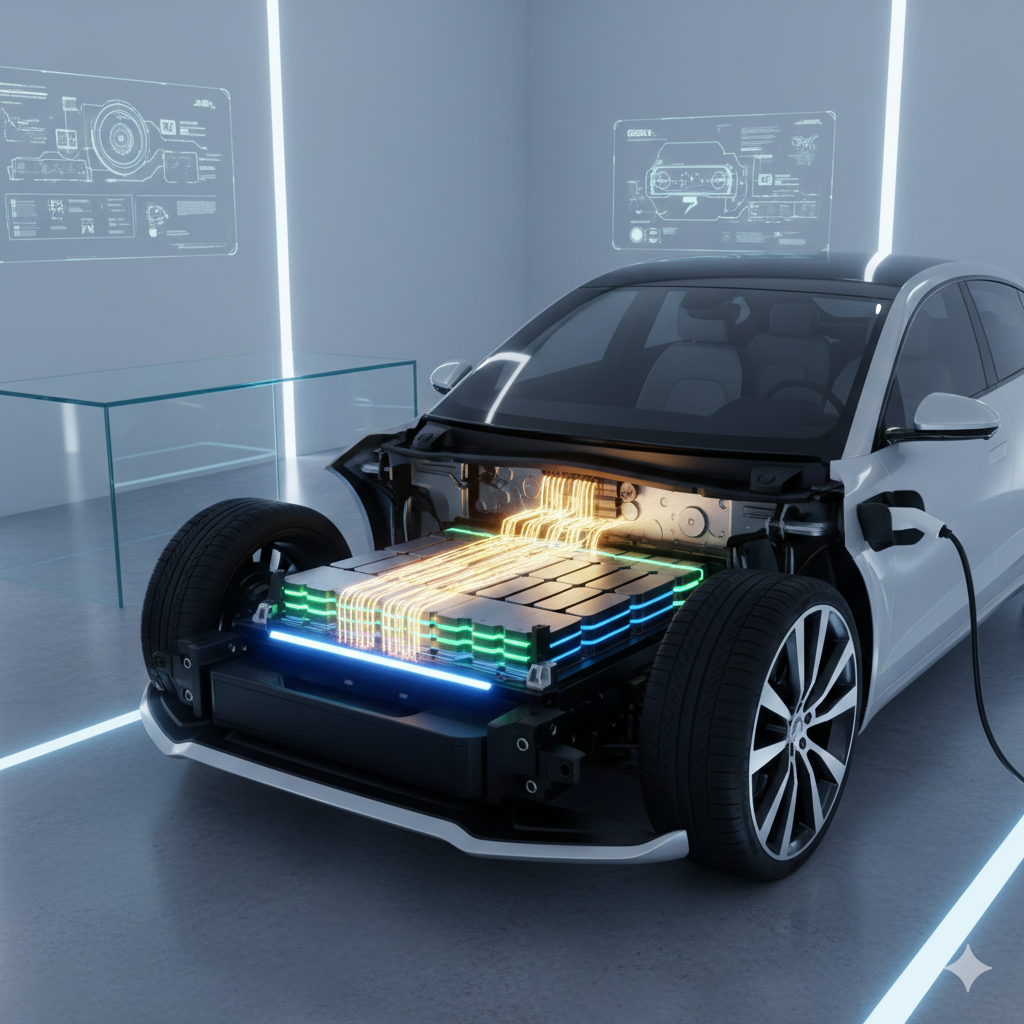
EV Battery Technology is the backbone of the electric vehicle revolution. Without better batteries, electric cars cannot deliver long range, fast charging, or safety.
In recent years, battery innovation has moved faster than ever. As a result, electric vehicles are now more reliable, affordable, and practical for daily use.
This blog explains the latest EV battery technology updates in simple and clear language.
Table of Contents
-
Growth of EV Battery Technology
-
Solid-State Battery Development
-
Fast Charging Innovations
-
Battery Range Improvement
-
Safety and Battery Management Systems
-
Sustainable EV Batteries
-
Cost Reduction and Market Impact
-
Falling Battery Prices
-
Effect on EV Adoption
Growth of EV Battery Technology
EV battery technology has evolved from basic lithium-ion cells to advanced energy-dense systems. Early electric cars had limited range and long charging times.
Today, new battery materials and smarter designs are solving these problems. This growth is pushing electric vehicles toward mass adoption.
Solid-State Battery Development
Solid-state batteries are one of the most important breakthroughs in EV battery technology. They replace liquid electrolytes with solid materials.
Why Solid-State Batteries Matter
Although still expensive, solid-state batteries are expected to enter mainstream EVs in the coming years.
Fast Charging Innovations
Charging speed remains a top concern for EV users. New EV battery technology focuses on ultra-fast charging systems.
Modern batteries support high-voltage charging that can deliver up to 80% charge in minutes. Improved cooling systems also prevent battery damage during fast charging.
This makes electric cars more convenient than ever.
Battery Range Improvement
Battery range has improved due to better cell chemistry and design. Silicon-based anodes and high-nickel cathodes allow batteries to store more power.
Below is a simple comparison of battery performance:
| Battery Type |
Average Range |
Charging Speed |
| Old Li-ion |
250–300 km |
Slow |
| New Li-ion |
400–500 km |
Fast |
| Solid-State |
600+ km |
Ultra-Fast |
Longer range helps reduce range anxiety for EV owners.
Safety and Battery Management Systems
Safety is critical in EV battery technology. Advanced Battery Management Systems (BMS) monitor temperature, voltage, and charging cycles in real time.
Thermal management systems prevent overheating and reduce fire risks. These improvements have made modern electric vehicles safer than traditional fuel cars.
Sustainable EV Batteries
Sustainability is now a major focus of battery innovation. Manufacturers are reducing the use of cobalt and increasing recycling rates.
Second-life EV batteries are reused for home energy storage and renewable power systems. This supports a cleaner and greener future.
Cost Reduction and Market Impact
Falling Battery Prices
Battery production costs have dropped due to large-scale manufacturing and improved materials. This directly impacts EV affordability.
Effect on EV Adoption
Lower battery costs mean cheaper electric cars. As a result, more consumers are switching from petrol vehicles to electric alternatives.
Conclusion
EV Battery Technology is transforming the electric vehicle industry. Faster charging, longer range, better safety, and lower costs are driving rapid growth.
As innovation continues, electric vehicles will become the most preferred mode of transport worldwide.