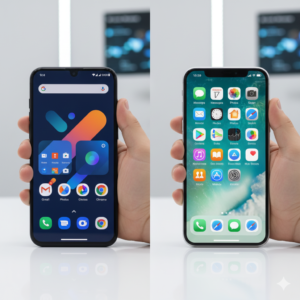
Choosing between Android and iOS is one of the most common dilemmas for smartphone users. Both operating systems have loyal users and unique advantages.
Understanding their differences helps you decide which OS fits your lifestyle, budget, and preferences. Let’s explore Android vs iOS: Which is better? in detail.
Table of Contents
User Interface and Experience
Performance and Speed
App Availability and Quality
Customization Options
Security and Privacy Features
Hardware and Device Options
Price and Value for Money
User Interface and Experience
iOS is known for its smooth, consistent interface. Its simplicity appeals to users who prefer an easy, intuitive experience.
Android offers more flexibility with home screens, widgets, and themes. Users who like to personalize their device enjoy Android’s customization options.
Your choice depends on whether you value simplicity or personalization.
Performance and Speed
Both Android and iOS perform well, but iOS devices often have optimized hardware-software integration.
Android devices vary widely in performance depending on brand, processor, and RAM. Flagship Android phones match iOS speed, while budget models may lag.
Performance is key for gaming, multitasking, and heavy app usage.
App Availability and Quality
Both platforms have millions of apps, but there are slight differences.
Consider which ecosystem supports the apps you use daily.
Customization Options
Android allows extensive customization: themes, widgets, app layouts, and third-party apps.
iOS has limited customization but offers a clean, consistent experience. Widgets and shortcuts have improved in recent iOS updates, but Android still leads in flexibility.
Security and Privacy Features
iOS is known for strong security and strict app review policies. Frequent software updates enhance protection.
Android has improved security significantly, but its open system can be vulnerable. Using trusted sources and updates is essential for Android users.
Hardware and Device Options
Android powers devices from multiple brands like Samsung, OnePlus, and Xiaomi. Choices range from budget to premium smartphones.
iOS is exclusive to Apple devices: iPhone, iPad, and iPod Touch. Hardware quality is consistently high but comes at a premium price.
Price and Value for Money
Android offers devices across all price ranges, providing options for budget-conscious users.
iOS devices are more expensive but provide long-term software support and high resale value.
Budget, preferences, and ecosystem play a big role in deciding value for money.
Android vs iOS Comparison Table
| Feature | Android | iOS |
|---|
| User Interface | Highly customizable | Smooth, consistent |
| Performance | Varies by device | Optimized hardware-software |
| App Availability | More free apps | Frequent updates, premium apps |
| Customization | Extensive | Limited but consistent |
| Security | Good, requires care | Strong, regular updates |
| Hardware Options | Many brands, multiple price ranges | Exclusive Apple devices |
| Price | Budget to premium | Premium only |
Final Thoughts
Both Android and iOS have unique advantages. Your decision should consider budget, preferences, security needs, and ecosystem.
For personalization and variety, Android is ideal. For a seamless, secure, and consistent experience, iOS is the top choice.
Ultimately, Android vs iOS: Which is better? depends on your priorities and lifestyle.